Proximity Network Assay
Proximity Network Assay (PNA) is the second generation of spatial network assays pioneered by Pixelgen Technologies. It can be used to study the cell surface proteome of more than 150 proteins in thousands of cells at the same time.
PNA creates a spatial network across a cell surface with the use of barcoded antibodies, and a linkage oligo. The linkage oligo records which two antibodies were adjacent to each other, thus creating a spatial network of neighborhoods of individual proteins.
These networks let researchers access information on both the abundance and spatial organization of proteins in single cells.
Technology Overview
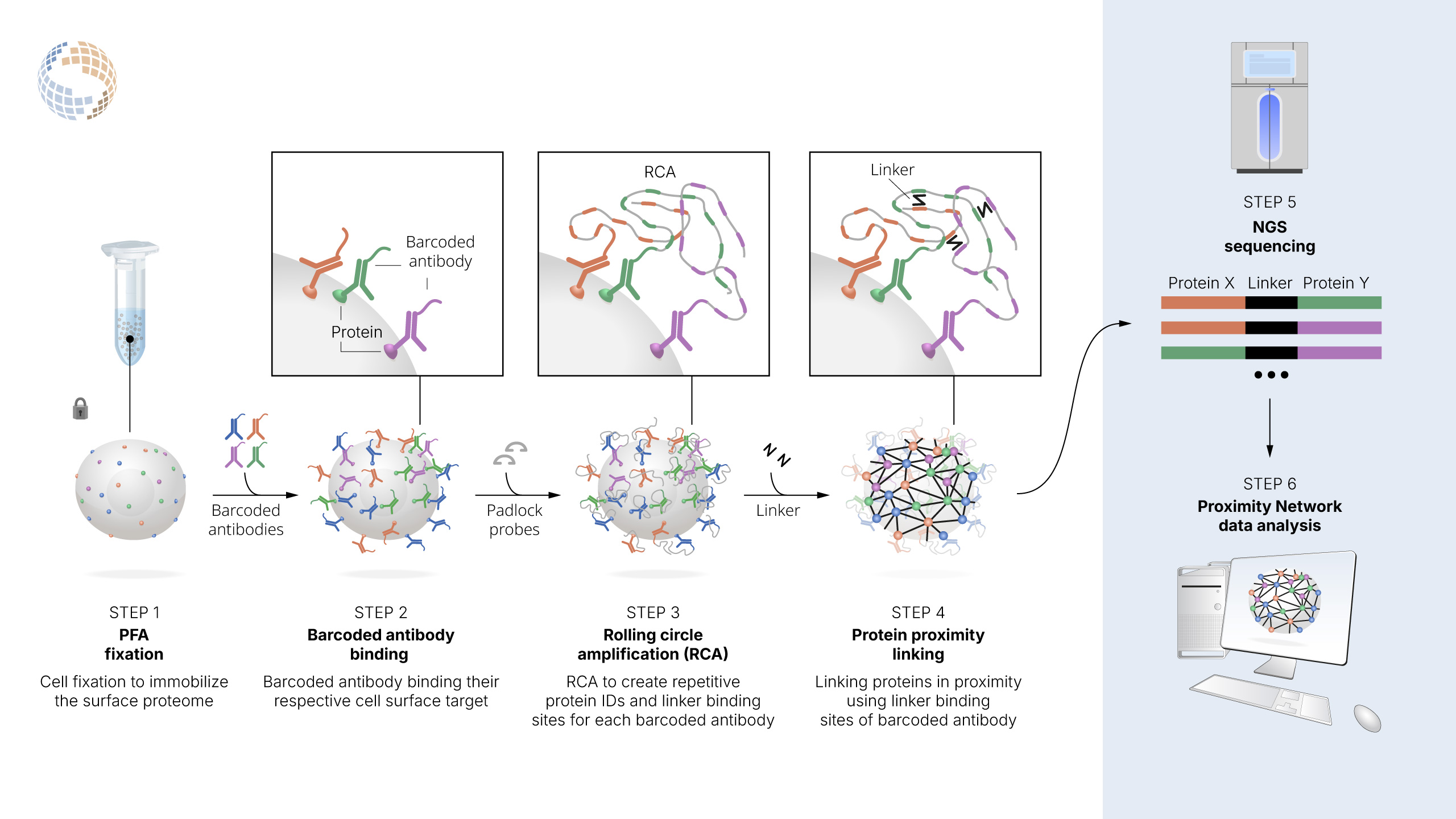
PNA creates an interconnected spatial network of detected proteins across the surface of individual cells. The assay starts with fixating cells to immobilize the surface proteome, after which a panel of barcoded antibodies are bound to each cell. A Rolling Circle amplification product (RCP) is then generated from each barcoded antibody, which enables hybridization of linkage oligos that connect proximate RCPs on each cell.
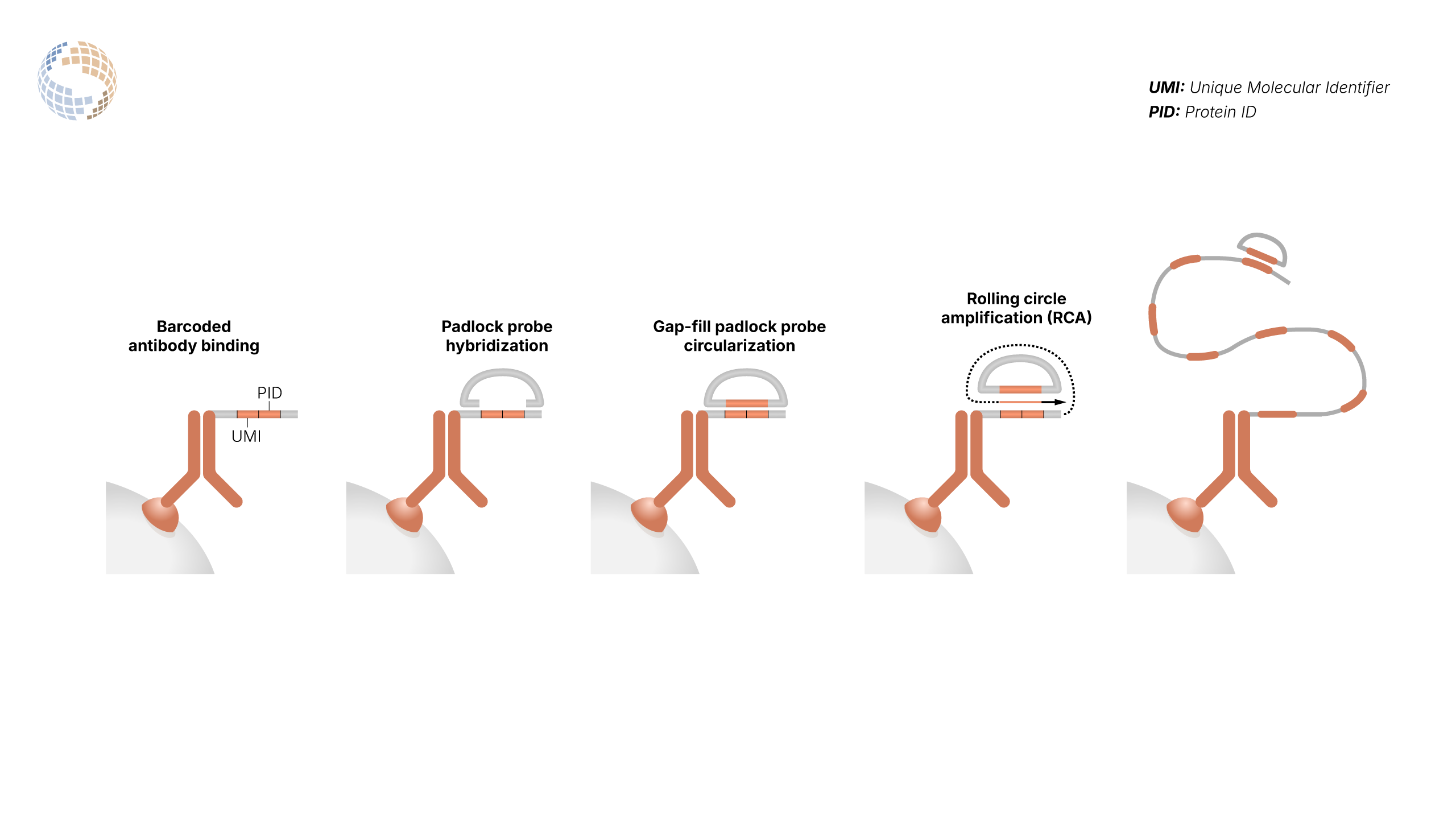
Each RCP contains multiple copies of a unique molecular identifier (UMI)
that is specific for the barcoded antibody molecule. UMI sequences from two UMIs from proximate
antibodies are incorporated onto a hybridized linkage oligo via a gapfill ligation reaction, thus
incorporating the information of which antibodies were adjacent into the linkage oligo itself.
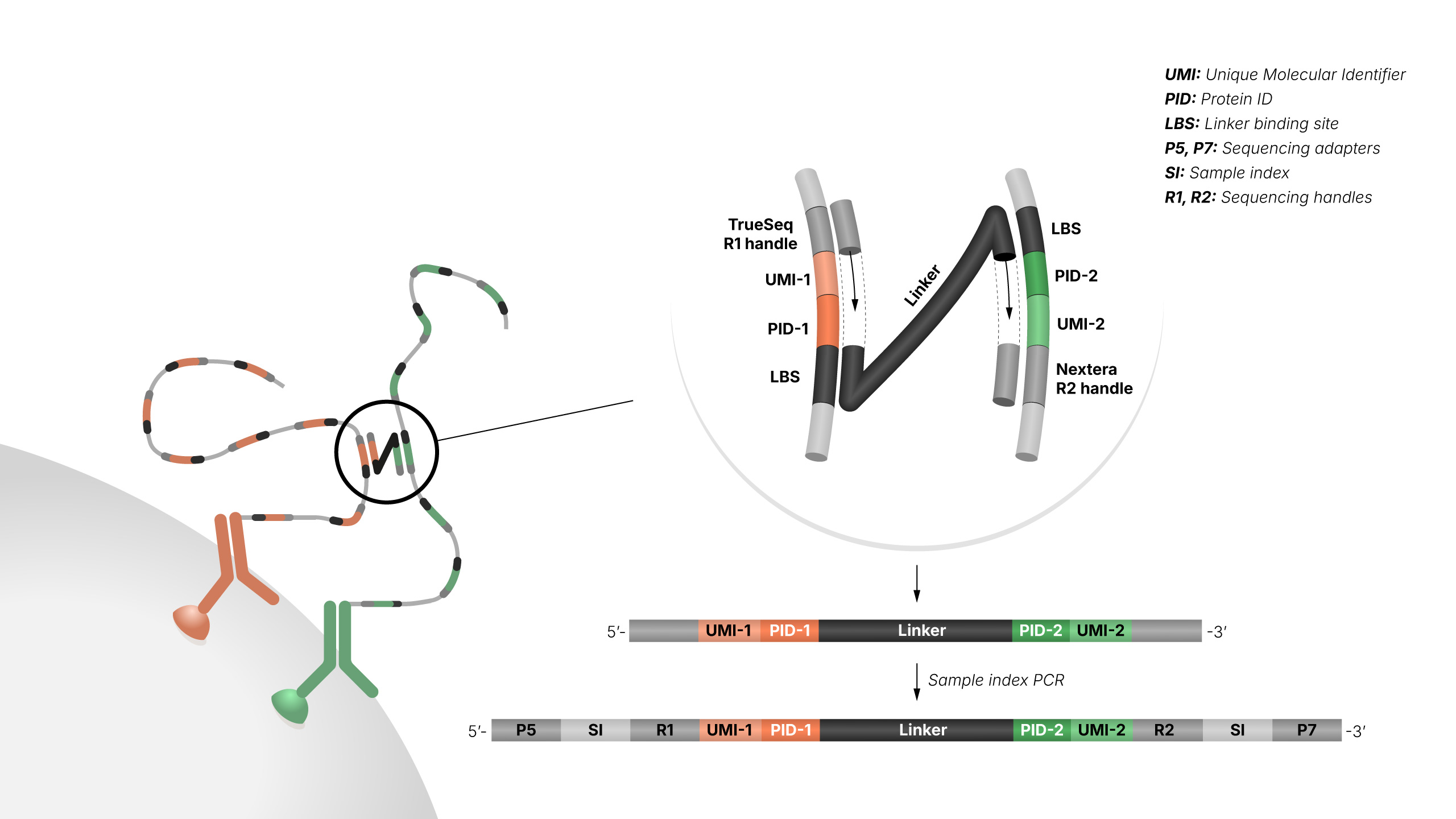
Upon sequencing of the generated molecules, this information is recorded. From the set of sequenced DNA linker molecules, each represents a link between two neighboring proteins. An interconnected spatial network is generated from each assayed cell, unlocking the potential to perform spatial statistics of proteins and make 3D visualizations of each of the thousands of single cells.
From Cells to Graphs
After sequencing, the resulting FASTQ files will contain a set of reads that describe the protein-protein spatial adjacencies that were generated from the PNA assay. However, in order to unlock the full potential of the data, these reads must be processed and compiled into the spatial protein networks that comprise the individual cells we started with. Fortunately, Pixelgen Technologies offers free, open-source software for you to process and analyze PNA data to do exactly that.
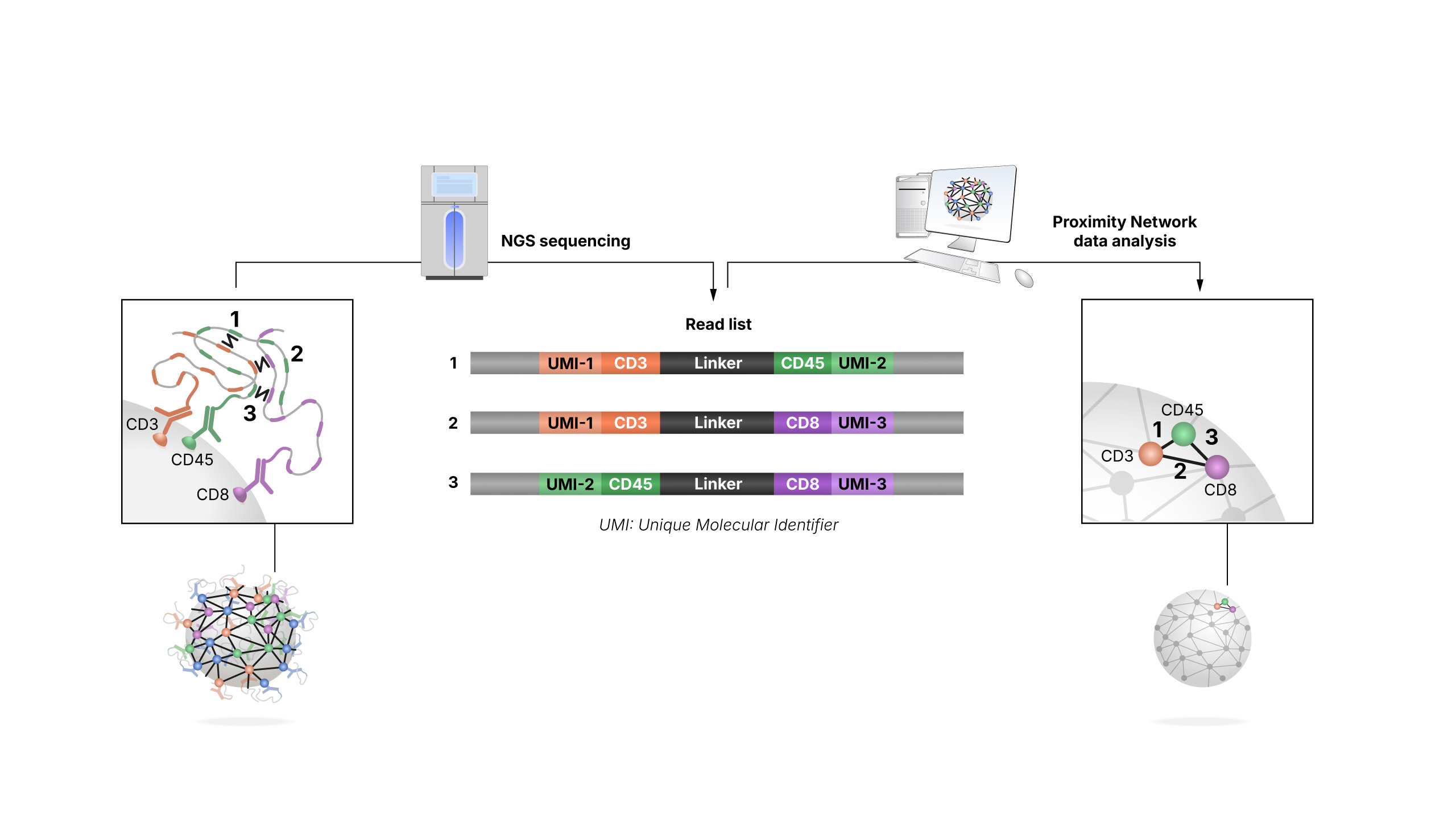
Pixelator is the main tool for processing PNA raw reads into structured data outputs, ready for analysis. Pixelator is incorporated into a Nextflow pipeline, providing an efficient and reproducible way to run the workflow.
If you want to read more see Pixelator and nf-core/pixelator.